Hurricane Nate has brought strong winds, torrential rain and a threat of storm surges to the US Gulf Coast.
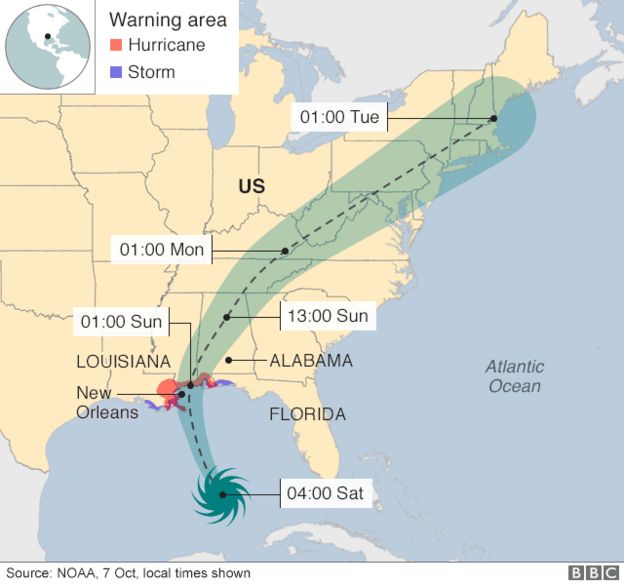
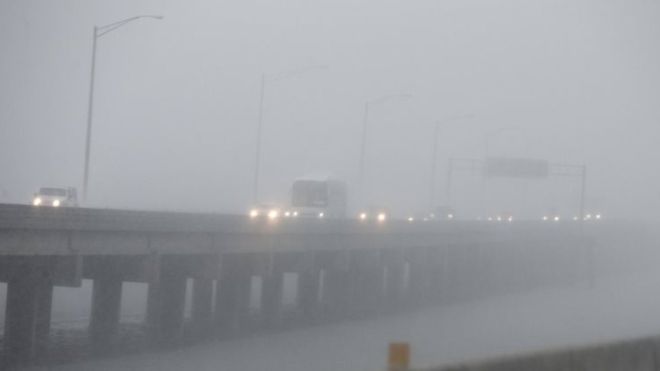
The storm, with maximum sustained winds of 85mph (137km/h), made landfall near the mouth of the Mississippi River in Louisiana, late on Saturday.
Moving north, it made a second landfall at Biloxi, Mississippi.
Louisiana, Mississippi, Alabama and parts of Florida earlier issued warnings and evacuation orders amid fears of rapidly rising sea waters.
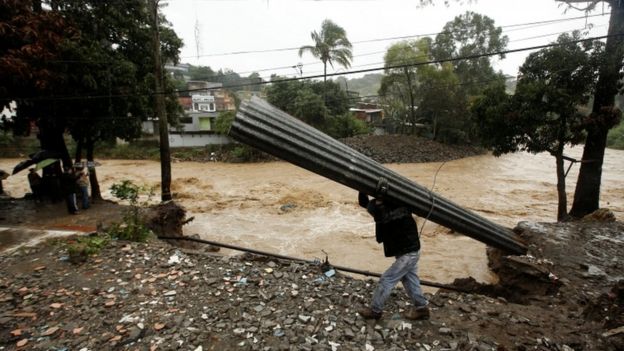
Nate killed at least 25 people in Nicaragua, Costa Rica and Honduras.
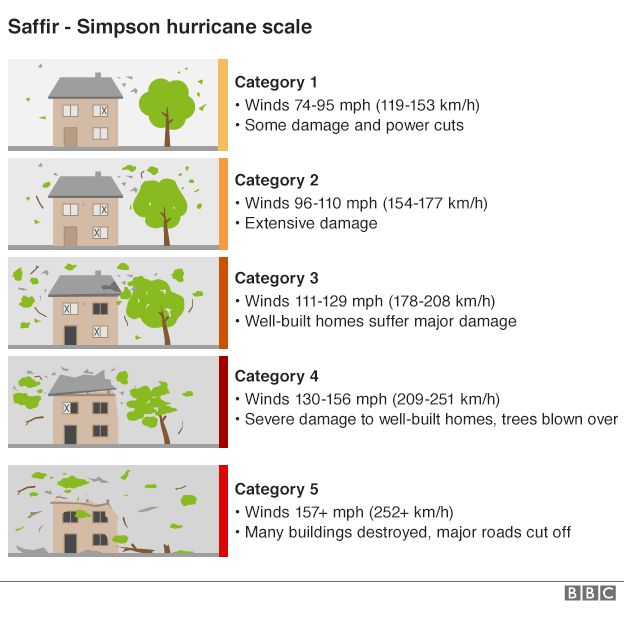
The tropical storm then strengthened to a category one hurricane on the Saffir-Simpson scale as it headed towards the US.
Although not as strong as last month’s Maria and Irma, officials had warned Nate was a fast-moving storm that could bring flooding to low-lying areas.
As Nate hit Biloxi, Billy Hewes, mayor of nearby Gulfport, told the BBC the storm surge did not appear to be as high as feared and he thought the damage would “be minimal”.
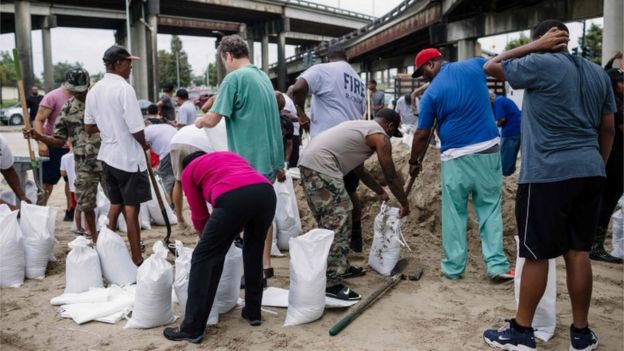 Image captionNew Orleans residents filled sandbags before Nate blew in
US President Donald Trump on Saturday issued an emergency declaration for Louisiana, allowing the state to seek federal help with preparation and possible relief efforts.
In Alabama, Republican Governor Kay Ivey urged residents in areas facing heavy winds and storm surges to take precautions.
Five ports along the Gulf Coast were closed to shipping as a precaution.
Most oil and gas platforms in the US Gulf of Mexico evacuated their staff and stopped production ahead of the storm.
-
Harvey v Katrina: Lessons learned?
-
How to stay safe in a hurricane
-
Do ‘Pray for…’ messages make disaster relief harder?