Asylum seekers who refused to leave a former Australian-run detention centre in Papua New Guinea (PNG) have been moved to new housing after a three-week stand-off, Canberra has confirmed.
The group had resisted leaving the Manus Island camp after it shut on 31 October, fearing attacks by locals.
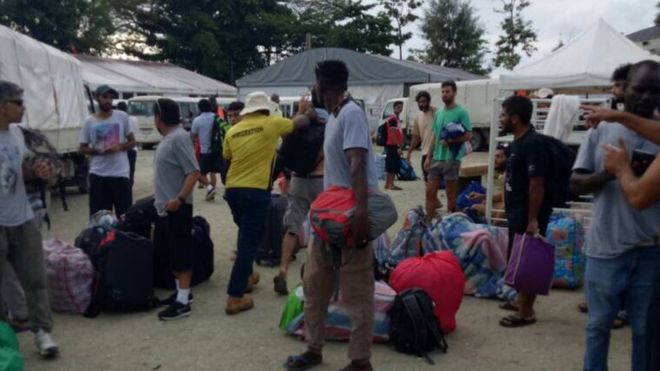
Buses carrying about 300 asylum seekers left the centre on Friday after police entered the facility for a second day.
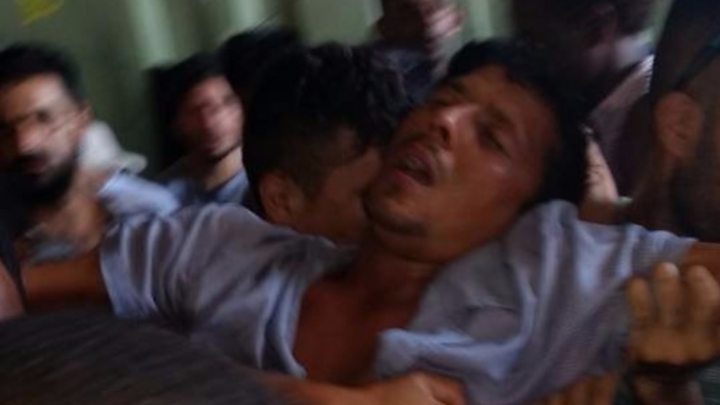
The former detainees claimed some men were struck with batons by PNG police.
Videos posted on social media showed PNG authorities swinging poles towards asylum seekers.
“They [the asylum seekers] are leaving, all the people. They don’t like to move but then they beat us,” one refugee told the BBC on Friday.
Australia’s Immigration Minister Peter Dutton said that claims of violence were “inaccurate and exaggerated”. Australian police said they were not involved in the operation.
Earlier, PNG police commissioner Gari Baki said that the police operation was being conducted “peacefully and without the use of force”.
-
‘Our situation is just like hell’
-
Manus: Timeline of a key events
-
Australia asylum: Why is it controversial?
Under a controversial policy, Australia has detained asylum seekers who arrive by boat in camps on Manus Island and Nauru, a small Pacific nation.
Australia shut down the Manus Island centre, which held only men, after a PNG court ruled it was unconstitutional.
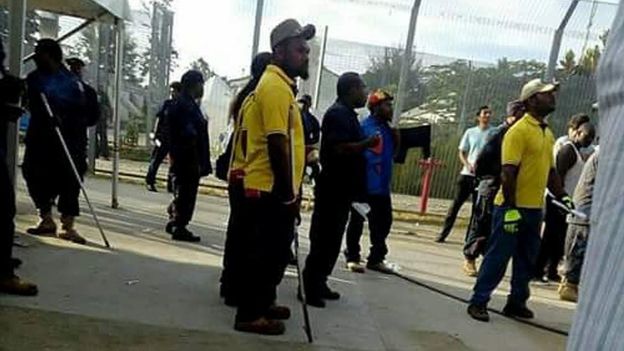 Image captionPNG officials removed about 50 men from the centre on Thursday
The UN’s refugee agency said on Thursday it was troubled by reports of forcible removals but could not independently verify the allegations because its staff had been denied access to the centre.
It has previously said a majority of detainees on Manus Island have refugee status.
About 600 asylum seekers had initially refused to leave the camp over fears they would be attacked in the local community, where their presence is a cause of tension. They endured squalid conditions after food, water and electricity were cut off.
On Friday, Mr Dutton said the men had moved to secure transit centres on Manus Island where food and medical services were available.
However, the UN’s refugee agency said on Tuesday that the alternative housing remained “under construction”, was inadequately secured, and lacked “the most basic services” including medical care.