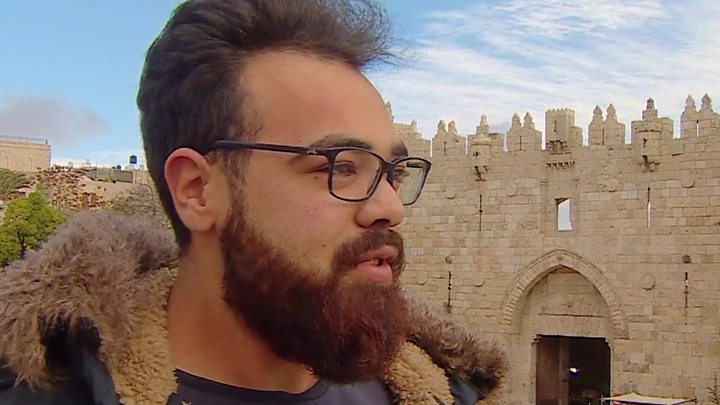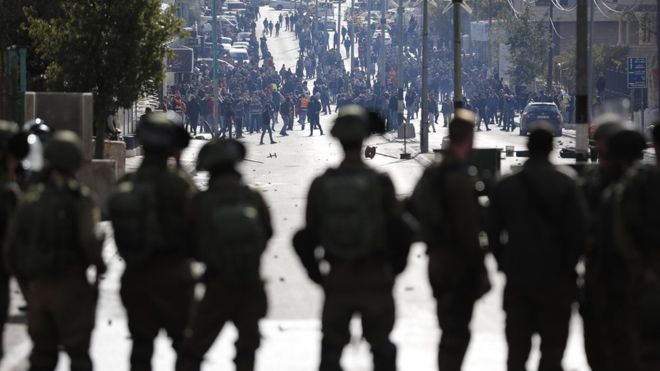
Palestinians in the occupied West Bank and Gaza Strip have gone on strike and are taking to the streets in protest at US President Donald Trump’s recognition of Jerusalem as Israel’s capital.
Israel has deployed hundreds of extra troops in the West Bank amid a rise in tensions.
Early reports say at least eight Palestinians have been hurt in clashes.
Mr Trump’s announcement reversed decades of US policy on a highly sensitive issue for the region.
It has been met with worldwide dismay.
Many of Washington’s closest allies have said they disagree with the move, and both the UN Security Council and the Arab League will meet in the coming days to decide their response.
There are fears the announcement could lead to a renewed outbreak of violence. The Palestinian Islamist group Hamas has already called for a new intifada, or uprising.
What did Trump say?
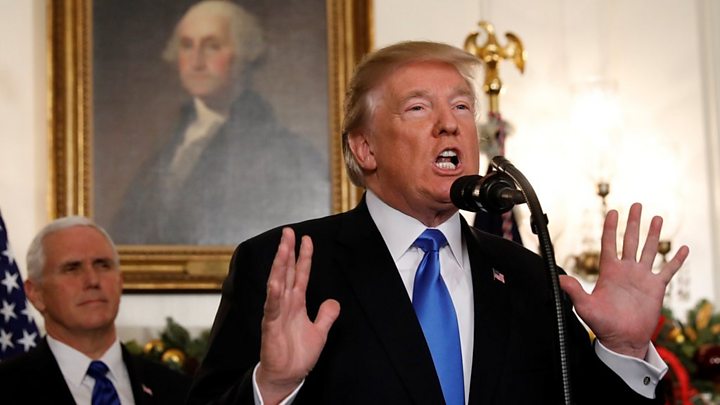
The US president said on Wednesday that he had “determined it is time to officially recognize Jerusalem as the capital of Israel”.
“I’ve judged this course of action to be in the best interests of the United States of America and the pursuit of peace between Israel and the Palestinians,” he said.
He said he was directing the US state department to begin preparations to move the US embassy from Tel Aviv to Jerusalem.
Media captionAnalysis: Breaking down what Mr Trump said and what it means for peace
Despite warnings of regional unrest over any such move, the decision fulfils a campaign promise and appeals to Mr Trump’s right-wing base.
Recognising Jerusalem as Israel’s capital was “nothing more or less than a recognition of reality”, he added. “It is also the right thing to do.”
Mr Trump said the US would support a two-state solution – shorthand for a final settlement that would see the creation of an independent Palestinian state within pre-1967 ceasefire lines in the West Bank, Gaza Strip and East Jerusalem, living peacefully alongside Israel – “if agreed to by both sides”.
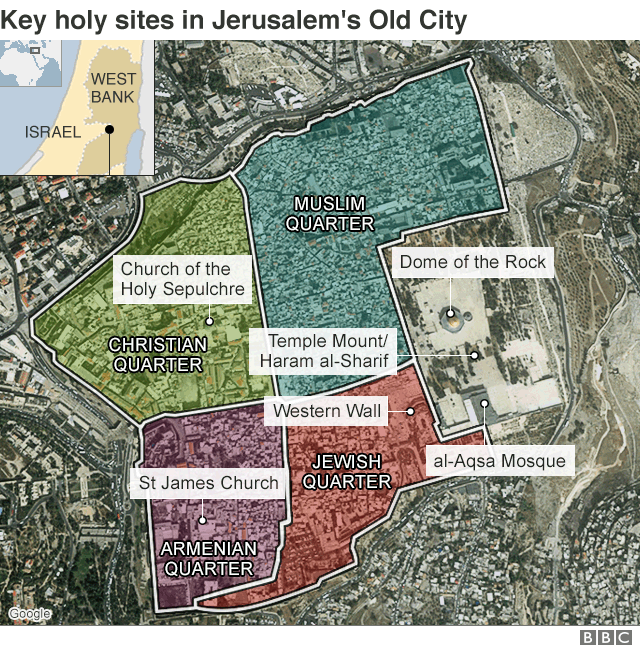
The president also refrained from using Israel’s description of Jerusalem as its “eternal and undivided capital”. The Palestinians want East Jerusalem to be the capital of any future Palestinian state.
What has been the reaction?
Israeli Prime Minister Benjamin Netanyahu said Israel was profoundly grateful to Mr Trump, who had “bound himself forever with the history of the capital”.
He also said Israel was “in touch with other countries to follow suit. I have no doubt other embassies will move to Jerusalem – the time has come”. He did not name any of these countries, although the Philippines and the Czech Republic have been mentioned in Israeli media.