The US envoy to the UN has warned America may take further action after bombarding a Syrian air base suspected of using chemical weapons.
Nikki Haley said her country would not stand by when chemical weapons were used, as it was in its “vital interest” to stop their proliferation.
Syrian ally Russia accused the US of encouraging “terrorists” with its unilateral actions.
Moscow has promised to strengthen its ally Syria’s anti-aircraft defences.
It is also closing down a hotline with the US designed to avoid collisions between their air forces over Syria.
At least six people are reported to have been killed in the US missile strikes early on Friday. US officials say the base was used to launch a chemical weapons attack that killed dozens of civilians on Tuesday.
According to Idlib’s opposition-run health authority, 89 people, including 33 children and 18 women, died in the suspected nerve agent attack in the rebel-held town of Khan Sheikhoun. Syria denies using nerve gas.
-
Decoding the Trump ‘war room’ photo
-
Five key things we learned
-
Why now and what next?
-
Dramatic turnaround for Trump
What are they saying in New York?
Ms Haley told an emergency session of the UN Security Council that America had acted to ensure Syrian President Bashar al-President Assad would never use chemical weapons again.
“We are prepared to do more but we hope that will not be necessary,” she said. “It is in our vital national security interest to prevent the spread and use of chemical weapons.”
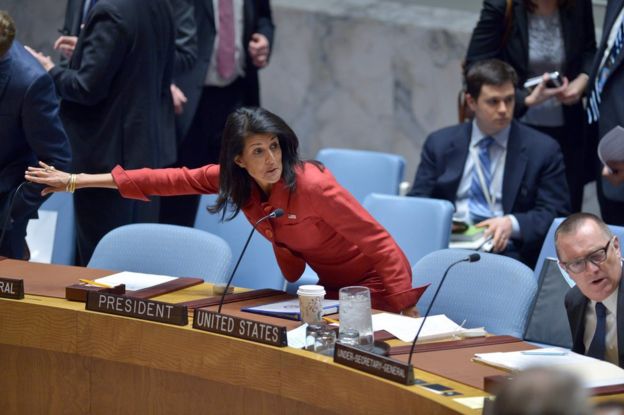 Image copyrightAFPImage captionThe US is currently chairing the UN Security Council
She blamed Iran and Russia for standing by the Syrian government when it committed crimes. “Strengthening Assad will only lead to more murders,” she said.
Russia’s deputy ambassador to the UN, Vladimir Safronkov, described the US strikes as “illegitimate”.
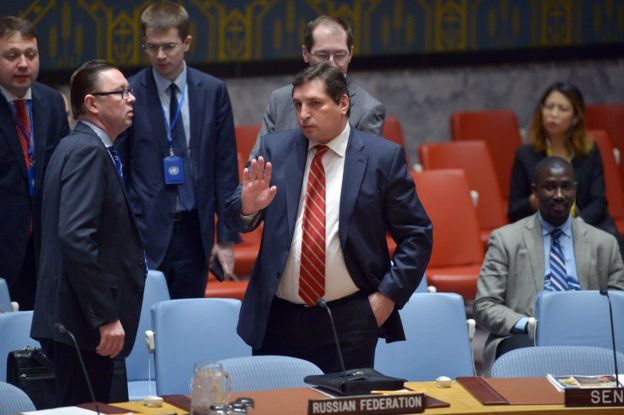 Image copyrightAFPImage captionVladimir Safronkov is representing Russia at the Security Council meeting
“When you take your own path, this leads to horrible tragedies in the region,” he told the Americans.
UK ambassador Matthew Rycroft said the strikes were a “proportionate response to unspeakable acts”.

America’s weapon of choice: Analysis by Jonathan Marcus, BBC defence & diplomatic correspondent
Cruise missiles fly low and have a relatively small radar cross-section so they are difficult to destroy with air defences. Russia may seek to improve Syria’s surface-to-air missile system in the wake of this US attack but it would be very much a case of shutting the stable door after the horse has bolted.
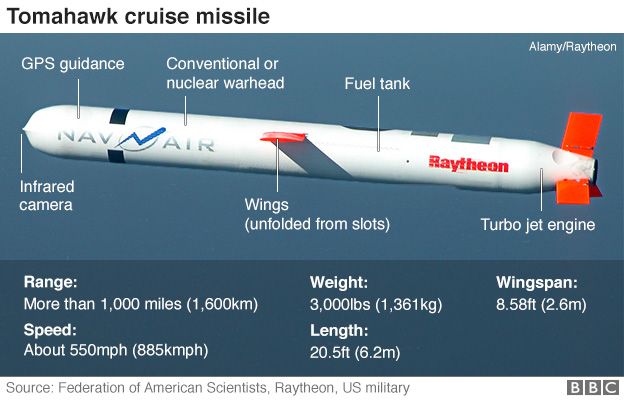
Syria used to have a highly effective national air defence system based on Soviet-era radars and missiles but it has been significantly weakened in the wake of the civil war and the loss of territory by the regime. Look at the ease with which the Israelis carry out strikes against Hezbollah arms convoys and weapons stores in Syria.
Russia has some of its most modern surface-to-air missile systems at its air base in Syria and radars with a huge reach but, for whatever reason, they too have not deterred Israeli strikes.
Their presence makes air strikes by manned US aircraft unlikely and for Washington the Tomahawk cruise missile will remain the weapon of choice
What do we know about the missile strike?
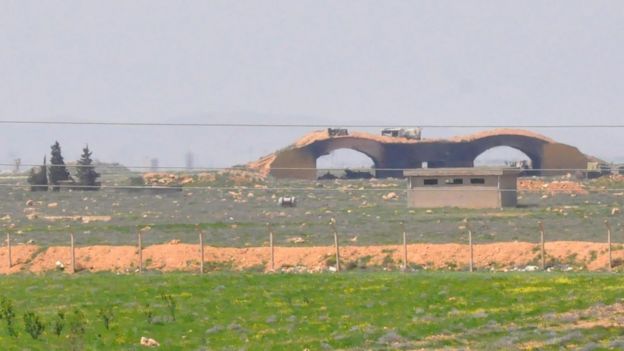
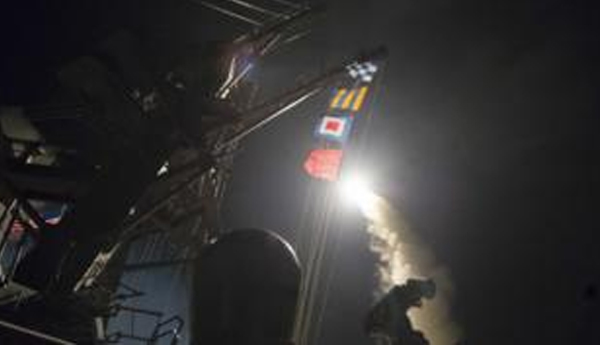
Two US Navy destroyers in the Mediterranean Sea fired 59 Tomahawk cruise missiles at Shayrat airfield in western Homs province at about 04:40 Syrian time (01:40 GMT).
They targeted aircraft, aircraft shelters, storage areas, ammunition supply bunkers and air defence systems at the Syrian government-controlled facility, according to the Pentagon.
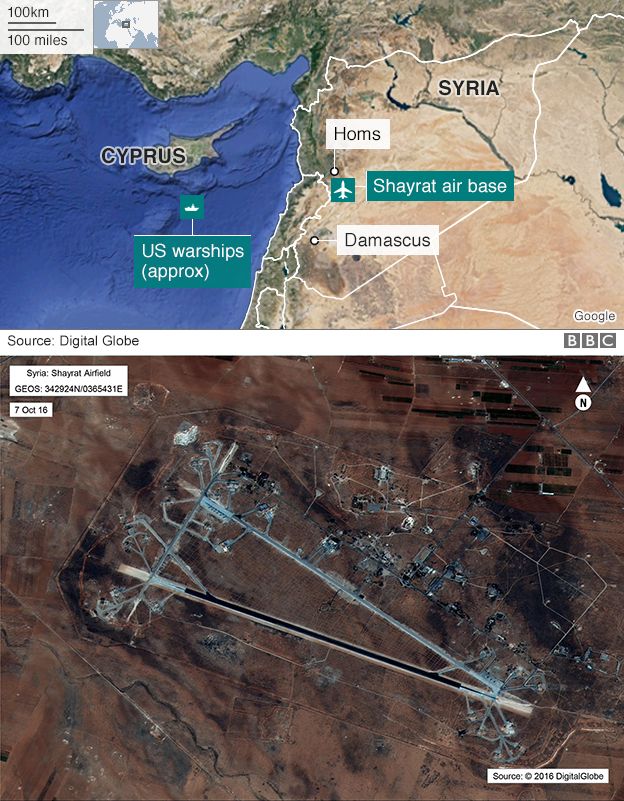
It said the base was used to store chemical weapons and that “every precaution” had been taken to avoid casualties. The Russian military was informed beforehand, the Pentagon said.
Unnamed US intelligence sources have told media they believe Russian personnel were at Shayrat when Sarin, a nerve agent, was loaded on to a Syrian jet but they have not established whether the Russians knew it was happening.
-
World reacts to US Syria strikes
-
UK ‘fully supports’ US action in Syria
-
Trump sends a resolute signal on Syria