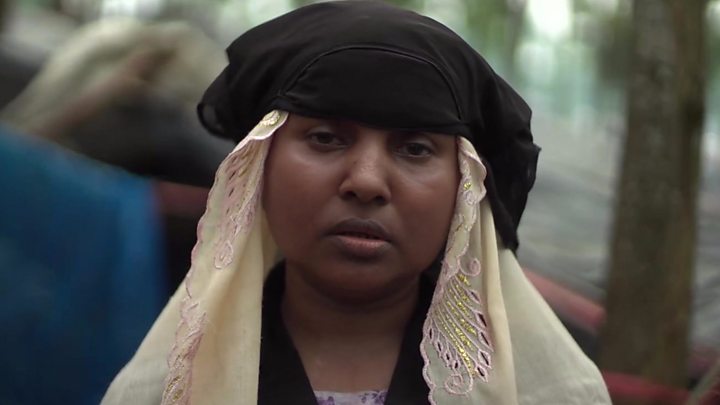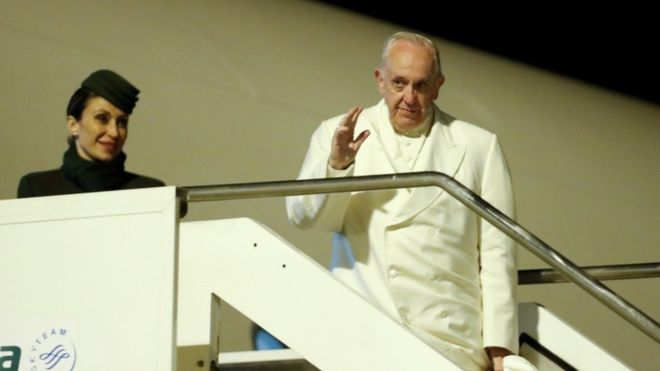
Pope Francis has arrived in Myanmar on the first papal visit to the country that has this year been widely accused of ethnic cleansing.
Focus will likely be on whether he uses the term “Rohingya” to describe the country’s Muslim minority.
Myanmar officials strongly reject the term, raising concerns it could spark some potential violence if he does.
He is scheduled to meet Myanmar’s de facto leader Aung San Suu Kyi, and the head of the country’s military.
The Pope will then visit Bangladesh, and meet a small group of Rohingya refugees there in a symbolic gesture. The 80-year-old pontiff has become known for his moderate views and willingness to denounce global injustice.
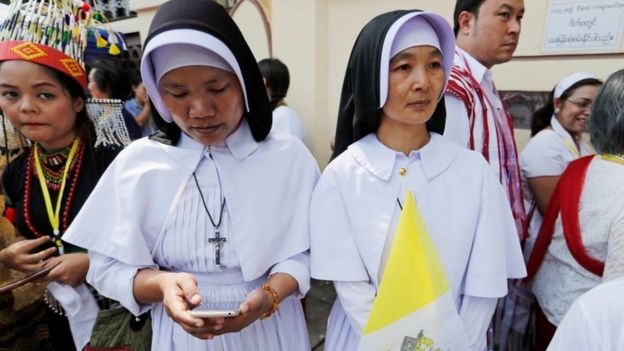 Image captionThousands have gathered in Yangon for the Pope’s first trip to the Buddhist-majority country
More than 600,000 people have fled to neighbouring Bangladesh since August when attacks on police posts prompted a military crackdown in the Rakhine state.
-
What you need to know about Rohingya crisis
-
Myanmar’s persecuted minority in pictures
-
More UK aid pledged for Myanmar’s Rohingya
The Pope used the term “our Rohingya brothers and sisters” while denouncing the persecution then, but Myanmar’s sole Catholic cardinal has asked him to avoid using it on the trip, fearing inflaming local insensitivities could lead to violence in the Buddhist-majority nation.
Myanmar officials do not use the term, instead labelling them “Bengalis”, and say they migrated illegally from Bangladesh so should not be listed as one of the country’s ethnic groups.
They say the military crackdown in Rakhine is to root out violent insurgents there, but the UN has described the violence as a “textbook example of ethnic cleansing” – a sentiment echoed by international critics.